






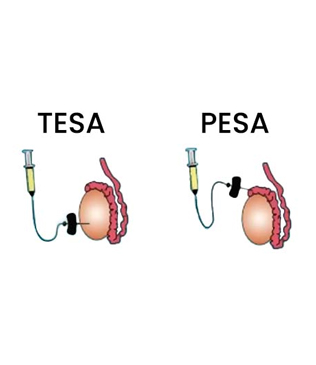
PESA / TESA
PESA (Percutaneous Epididymal Sperm Aspiration) and TESA (Testicular Sperm Aspiration) are advanced medical procedures used to retrieve sperm directly from the male reproductive organs. These procedures are commonly used in assisted reproductive techniques, particularly when sperm is not present in the semen due to certain medical conditions.
PESA and TESA are minimally invasive techniques that allow fertility specialists to collect sperm from the epididymis or testicular tissue using a fine needle. The retrieved sperm can then be used in fertility treatments such as IVF or ICSI to help couples achieve pregnancy. These procedures offer an effective solution for male infertility, especially in cases where natural sperm release is not possible.
Who May Need PESA / TESA
- Men with obstructive azoospermia (blocked sperm ducts)
- Men with very low or absent sperm in semen
- Patients with previous vasectomy seeking fertility treatment
- Individuals with congenital absence of vas deferens
- Men with ejaculatory disorders
- Cases where sperm retrieval is required for IVF or ICSI
Difference Between PESA and TESA
- PESA retrieves sperm from the epididymis using a fine needle
- TESA retrieves sperm directly from the testicular tissue
- PESA is typically used when sperm production is normal but blocked
- TESA is used when sperm cannot be obtained from the epididymis
- Both procedures are minimally invasive
- The retrieved sperm is used for assisted reproductive treatments
Procedure Overview
- Local or mild anesthesia is administered
- A fine needle is inserted into the epididymis or testicle
- Sperm-containing fluid or tissue is gently aspirated
- The sample is sent to the laboratory for examination
- Healthy sperm are isolated for use in IVF or ICSI
- The procedure usually takes a short time and is performed on an outpatient basis
Advantages of PESA / TESA
- Provides a solution for male infertility
- Minimally invasive and relatively quick procedure
- Can retrieve sperm even when semen analysis shows no sperm
- Supports successful IVF and ICSI treatments
- Performed under local anesthesia
- Short recovery time
Recovery and Post-Procedure Care
- Mild swelling or discomfort may occur temporarily
- Rest is usually recommended for a short period
- Patients can typically resume normal activities soon
- Follow medical advice for recovery and fertility planning
- Attend follow-up consultations if required
- Discuss next steps for fertility treatment with the doctor
PESA and TESA are important techniques in modern reproductive medicine that help overcome certain forms of male infertility. By retrieving viable sperm directly from the reproductive organs, these procedures allow many couples to pursue successful fertility treatments and achieve their dream of parenthood.