






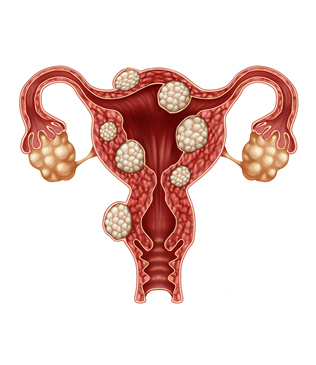
Uterine Fibroids
Uterine fibroids are non-cancerous growths that develop in or around the uterus. They are also known as leiomyomas or myomas and are quite common among women of reproductive age. Fibroids can vary in size, number, and location within the uterus, and while many women may not experience symptoms, others may face discomfort and menstrual irregularities.
Fibroids grow from the muscular wall of the uterus and are influenced by hormonal changes, particularly estrogen and progesterone. Although fibroids are usually benign, they can sometimes cause symptoms such as heavy menstrual bleeding, pelvic pain, pressure in the lower abdomen, and fertility issues. Early diagnosis and appropriate treatment can help manage symptoms and maintain reproductive health.
Common Symptoms of Fibroids
- Heavy or prolonged menstrual bleeding
- Pelvic pain or pressure
- Frequent urination due to pressure on the bladder
- Lower back pain
- Pain during intercourse
- Difficulty conceiving or fertility problems
Types of Uterine Fibroids
- Intramural fibroids – grow within the muscular wall of the uterus
- Submucosal fibroids – develop just beneath the inner lining of the uterus
- Subserosal fibroids – grow on the outer surface of the uterus
- Pedunculated fibroids – attached to the uterus by a thin stalk
- Multiple fibroids – more than one fibroid present in the uterus
Possible Causes and Risk Factors
- Hormonal imbalance involving estrogen and progesterone
- Family history of fibroids
- Early onset of menstruation
- Obesity or excess body weight
- Diet high in red meat and low in fruits and vegetables
- Lifestyle and genetic factors
Diagnosis and Evaluation
- Detailed medical and menstrual history
- Pelvic examination by a gynecologist
- Ultrasound imaging of the uterus
- MRI scan if detailed imaging is required
- Blood tests to check for anemia caused by heavy bleeding
- Additional tests depending on symptoms
Treatment and Management Options
- Medications to manage symptoms and control bleeding
- Hormonal therapy to regulate menstrual cycles
- Minimally invasive procedures to remove fibroids
- Myomectomy surgery to preserve the uterus
- Advanced treatments depending on size and number of fibroids
- Regular monitoring for small or asymptomatic fibroids
When to Consult a Gynecologist
- Heavy or prolonged menstrual bleeding
- Persistent pelvic pain or discomfort
- Rapid growth of abdominal swelling
- Difficulty in conceiving
- Frequent urination or pressure symptoms
- Symptoms affecting daily activities
Uterine fibroids are a common condition, but with early detection and proper medical care, they can be effectively managed. Treatment depends on factors such as the size and location of fibroids, severity of symptoms, and future pregnancy plans. With appropriate diagnosis, personalized treatment, and regular follow-up, women can maintain their reproductive health and overall well-being.